I’m going the extra mile to replicate a substantial amount of original behavior of the phone as authentically as reasonable (or maybe beyond reasonable). I previously didn’t really know exactly how the phone worked when it had service, when it was making/receiving a call, or when it was in a call. I could only guess based on vague descriptions of features in the owner’s manual.
But now I can experience the true original behavior thanks to obsolete mobile service testing equipment! This equipment simulates a cellular base station and allows you to simulate incoming/outgoing calls (among a lot of other important stuff for testing/developing phones back in the 90’s that I don’t care about). Here’s a demo of the service tester performing all the main functions:

I’ve already discovered many details I had wrong or just didn’t know about at all previously. For example, the “cadence” of my ringtone was wrong (length of each “ring”, and amount of silence between each “ring”). I’ve now updated it to match the original ringtone exactly. And while putting together a video to compare some original behavior to my Bluetooth adapter behavior back-to-back, I even discovered that the sound of the ringtone itself was wrong!
Here’s a video comparing some some of the basic behavior of my Bluetooth adapter to the original behavior (the “smoother” ringtone option at the end is the incorrect sound I’ve been using for about a year).
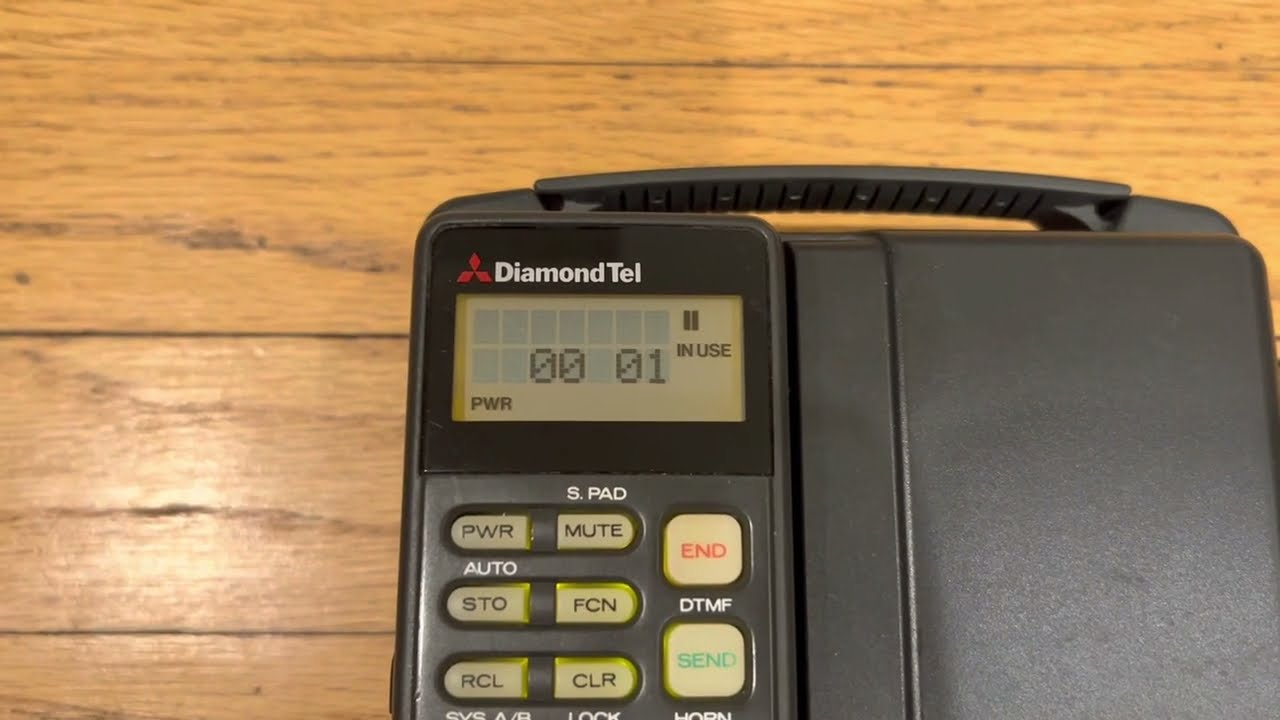
The power-on sequence has to be a bit different just because the Bluetooth adapter needs to be able to distinguish between “no Bluetooth connection” (flashing NO SVC) and “Bluetooth connection, but no cell service” (solid NO SVC). I also use a distinct sound effect for Bluetooth connect and disconnect.
Here’s another video showing various connection/service status changes with the Bluetooth adapter. After the Bluetooth connection is established, changes in cell service status are practically identical to the original behavior (appropriate indicator on the display, along with a notification beep).
